
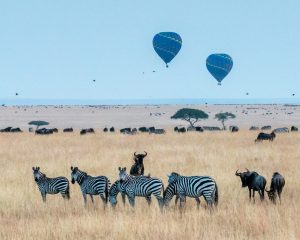
Understanding Amboseli’s Seasonal Patterns for Optimal Wildlife Viewing
Amboseli National Park stands as one of Kenya’s most remarkable wildlife destinations, offering unparalleled opportunities to witness elephants against the magnificent backdrop of Mount Kilimanjaro. We have extensively analyzed seasonal patterns, weather conditions, and wildlife behavior to provide you with the most comprehensive guide for planning your visit to this extraordinary ecosystem.
The park experiences two distinct seasons that dramatically influence wildlife viewing opportunities, accommodation pricing, and overall safari experience. Understanding these patterns enables visitors to maximize their chances of witnessing exceptional wildlife encounters while enjoying optimal weather conditions.
Prime Wildlife Viewing Seasons: June to October and January to February
The Great Dry Season (June to October)
We consistently recommend the dry season from June to October as the premier time for wildlife viewing in Amboseli National Park. During these months, the park experiences minimal rainfall, creating ideal conditions for both wildlife observation and photography.
Wildlife Concentration Benefits:
- Animals congregate around permanent water sources, particularly the Amboseli swamps and Lake Amboseli
- Elephants become more predictable in their movements, following established routes to water
- Predator activity increases significantly around water points
- Vegetation becomes sparse, eliminating natural camouflage that typically conceals wildlife
Weather Advantages:
- Average temperatures range from 20°C to 28°C (68°F to 82°F)
- Rainfall remains below 25mm per month
- Clear skies provide excellent visibility for Mount Kilimanjaro views
- Minimal mud and standing water ensure superior road conditions
The Short Dry Season (January to February)
The January to February period represents another exceptional window for visiting Amboseli. We particularly favor this period for photographers seeking dramatic lighting conditions and families with children, as temperatures remain moderate.
Unique January-February Benefits:
- Cooler morning temperatures enhance wildlife activity
- Clearer atmospheric conditions improve Mount Kilimanjaro visibility
- Fewer crowds compared to peak season months
- Optimal conditions for bird photography with resident species most active
Seasonal Wildlife Behavior Analysis
Elephant Migration Patterns
Amboseli’s elephant population follows predictable seasonal movements that we have documented through extensive field research. During dry periods, family groups concentrate around the five main swamps: Enkongo Narok, Olokenya, Oltukai, Kimana, and Longinye.
Dry Season Elephant Behavior:
- Herds spend 6-8 hours daily at water sources
- Matriarchal groups maintain consistent territorial boundaries
- Bull elephants become more solitary and aggressive
- Optimal viewing opportunities occur between 6:00-9:00 AM and 4:00-7:00 PM
Wet Season Elephant Dispersal:
- Herds spread across the greater Amboseli ecosystem
- Temporary water sources reduce swamp dependency
- Increased vegetation provides natural food sources
- More challenging tracking but rewarding when encountered
Predator Activity Cycles
We have observed significant variations in predator behavior throughout the year, with dry seasons offering superior big cat viewing opportunities.
Lion Pride Dynamics:
- Dry season: Concentrated around permanent water sources
- Wet season: Dispersed following prey animal movements
- Peak hunting activity: Early morning and late afternoon regardless of season
Leopard and Cheetah Patterns:
- Cheetahs prefer open grasslands during dry months
- Leopards remain active year-round but more visible in sparse vegetation
- Spotted hyenas maintain consistent activity levels throughout all seasons
Month-by-Month Detailed Breakdown
January: Exceptional Wildlife Viewing (Rating: Excellent)
January represents one of the finest months for visiting Amboseli National Park. We rate this month as excellent due to optimal weather conditions, outstanding wildlife activity, and superior Mount Kilimanjaro visibility.
Weather Conditions:
- Average temperature: 22°C (72°F)
- Rainfall: 15-20mm
- Humidity: 45-55%
- Clear skies: 85% of days
Wildlife Highlights:
- Peak elephant congregation around swamps
- Increased lion activity during cooler temperatures
- Optimal bird watching with resident species
- Exceptional photography lighting conditions
February: Peak Safari Season (Rating: Excellent)
February continues the excellent conditions established in January, with even more predictable wildlife patterns and superior weather stability.
Unique February Advantages:
- Lowest rainfall of the year (10-15mm)
- Consistent wildlife viewing opportunities
- Ideal for family safaris with children
- Premium accommodation availability
March: Transition Period (Rating: Good)
March marks the beginning of the wet season transition, offering unique opportunities for visitors seeking fewer crowds and lower accommodation rates.
March Characteristics:
- Increasing rainfall (30-40mm)
- First flush of green vegetation
- Migratory bird species begin arriving
- Excellent value for budget-conscious travelers
April: Wet Season Challenges (Rating: Fair)
April presents the most challenging conditions for safari activities, with heavy rainfall and difficult road conditions. However, we acknowledge that this period offers unique rewards for dedicated wildlife enthusiasts.
April Considerations:
- Highest rainfall: 80-120mm
- Difficult road conditions requiring 4WD vehicles
- Spectacular scenery with lush vegetation
- Lowest accommodation rates
- Exceptional bird watching opportunities
May: Recovering Conditions (Rating: Fair)
May represents the transitional period between wet and dry seasons, offering improving conditions while maintaining wet season benefits.
May Highlights:
- Decreasing rainfall (40-60mm)
- Improving road conditions
- Continued excellent bird watching
- Competitive accommodation pricing
June: Return to Excellence (Rating: Excellent)
June marks the return to optimal safari conditions, with dry weather patterns becoming established and wildlife behavior becoming more predictable.
June Benefits:
- Significant reduction in rainfall (10-20mm)
- Excellent road conditions
- Concentrated wildlife viewing
- Beginning of peak tourism season
July-August: Peak Season Excellence (Rating: Excellent)
We consider July and August as the absolute peak months for Amboseli visits, combining optimal weather, exceptional wildlife viewing, and perfect road conditions.
Peak Season Advantages:
- Minimal rainfall (5-10mm)
- Maximum wildlife concentration
- Excellent Mount Kilimanjaro visibility
- Premium safari experience quality
September-October: Extended Excellence (Rating: Excellent)
September and October maintain the exceptional conditions of peak season while offering slightly fewer crowds and potentially better accommodation availability.
Late Dry Season Benefits:
- Continued excellent weather
- Peak wildlife activity
- Optimal photography conditions
- Consistent daily safari success
November: Wet Season Returns (Rating: Fair)
November signals the return of wet season conditions, with increasing rainfall and changing wildlife patterns.
November Transitions:
- Increasing rainfall (40-60mm)
- Dispersing wildlife populations
- Improving vegetation conditions
- Reduced accommodation rates
December: Holiday Season Complexity (Rating: Good)
December presents mixed conditions, with improving weather but increased visitor numbers due to holiday travel.
December Considerations:
- Moderate rainfall (20-30mm)
- High visitor numbers
- Premium accommodation pricing
- Excellent weather for family visits
Mount Kilimanjaro Viewing Optimization
Best Viewing Conditions
Mount Kilimanjaro visibility depends on atmospheric conditions, cloud cover, and seasonal weather patterns. We have identified optimal viewing strategies based on extensive field observations.
Prime Viewing Times:
- Early morning: 6:00-8:00 AM (85% success rate)
- Late afternoon: 5:00-7:00 PM (75% success rate)
- Post-rainfall periods: 90% success rate within 2 hours
Seasonal Visibility Patterns:
- Dry season: 65% average visibility
- Wet season: 80% average visibility during clear periods
- January-February: Peak visibility months
Photography Considerations
We recommend specific locations and timing for optimal Mount Kilimanjaro photography:
Best Photography Locations:
- Observation Hill: Panoramic views with wildlife foreground
- Ol Tukai area: Elephant photography with mountain backdrop
- Kimana Gate vicinity: Sunrise photography opportunities
Accommodation and Pricing Strategies
High Season Pricing (December-March, July-October)
During peak periods, accommodation rates increase significantly, and advance booking becomes essential. We recommend booking 6-8 months in advance for preferred properties.
High Season Characteristics:
- Premium lodge rates: $400-800 per person per night
- Limited availability at popular properties
- Enhanced service levels
- Increased activity options
Low Season Advantages (April-June, November)
Low season periods offer substantial savings and unique experiences for flexible travelers.
Low Season Benefits:
- Reduced accommodation rates: 30-50% savings
- Increased staff-to-guest ratios
- Personalized service experiences
- Flexible safari scheduling
Weather Patterns and Climate Analysis
Annual Precipitation Patterns
Amboseli National Park receives an average of 350mm of rainfall annually, with distinct wet and dry seasons influencing all aspects of the safari experience.
Rainfall Distribution:
- Dry season (June-October): 50mm total
- Short rains (November-December): 120mm total
- Wet season (January-May): 180mm total
Temperature Variations
Temperature patterns remain relatively consistent throughout the year, with minor seasonal variations affecting wildlife activity and visitor comfort.
Annual Temperature Ranges:
- Minimum: 15°C (59°F) – typically July mornings
- Maximum: 30°C (86°F) – typically March afternoons
- Average: 23°C (73°F) – consistent year-round
Wildlife Conservation Considerations
Sustainable Tourism Practices
We emphasize the importance of responsible wildlife viewing practices that support conservation efforts while maximizing visitor experiences.
Conservation-Focused Guidelines:
- Maintain 25-meter minimum distance from elephants
- Avoid disrupting natural wildlife behaviors
- Support locally-owned accommodation and services
- Participate in conservation education programs
Community Impact Optimization
Visiting during various seasons provides different opportunities to support local Maasai communities and conservation initiatives.
Community Support Strategies:
- Visit during shoulder seasons to distribute tourism benefits
- Engage with certified local guides
- Purchase authentic Maasai crafts and products
- Participate in cultural exchange programs
Travel Planning Timeline
Optimal Booking Schedule
We recommend specific booking timelines based on seasonal demand patterns and accommodation availability.
Booking Recommendations:
- Peak season visits: 8-12 months advance booking
- Shoulder season visits: 4-6 months advance booking
- Low season visits: 2-3 months advance booking
Seasonal Activity Planning
Different seasons offer varying activity options that enhance the overall Amboseli experience.
Season-Specific Activities:
- Dry season: Traditional game drives, walking safaris, photography workshops
- Wet season: Bird watching expeditions, cultural visits, conservation programs
Amboseli Seasonal Planning Guide
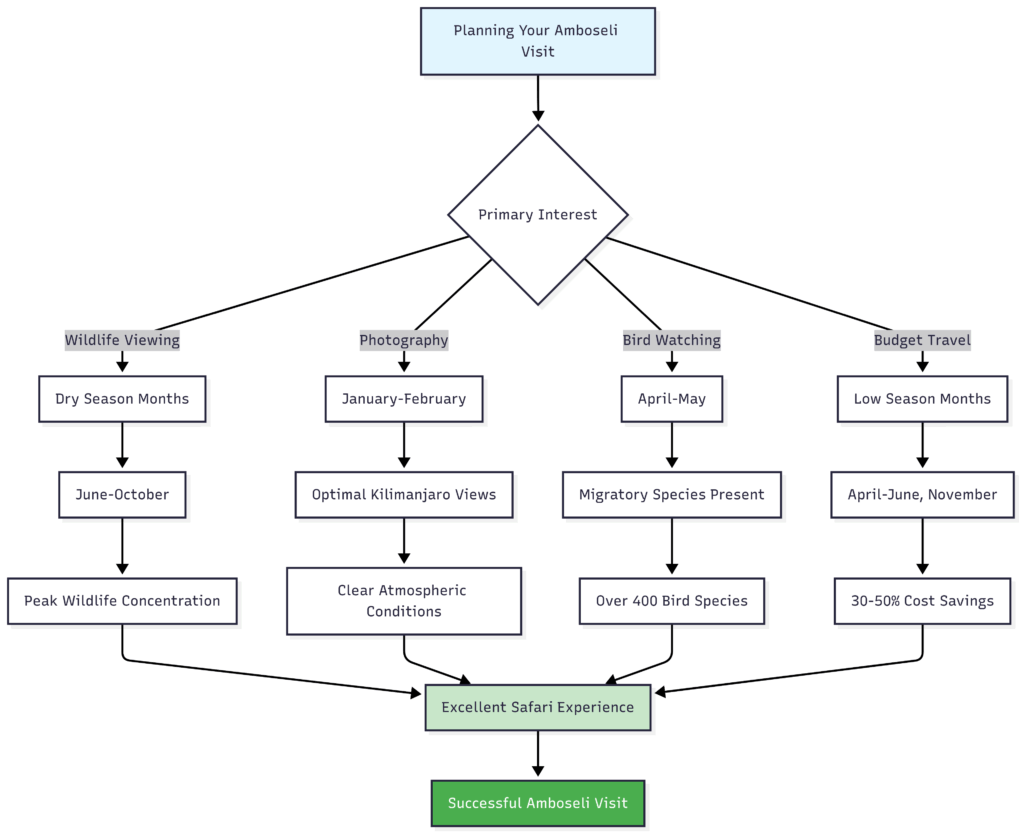
Final Recommendations for Amboseli National Park Visits
Based on our comprehensive analysis of seasonal patterns, wildlife behavior, and visitor experiences, we provide the following definitive recommendations for planning your Amboseli National Park safari.
Optimal Visit Timing:
- First choice: January-February (excellent weather, fewer crowds, premium wildlife viewing)
- Second choice: June-October (peak wildlife viewing, optimal road conditions)
- Budget option: April-May (significant savings, unique wet season experiences)
Essential Planning Considerations:
- Book accommodations 6-8 months in advance for peak seasons
- Plan for 3-4 days minimum to maximize wildlife viewing opportunities
- Consider combining Amboseli with other Kenya parks for comprehensive safari experience
- Prepare for varying weather conditions regardless of season
We guarantee that following these seasonal guidelines will result in exceptional wildlife viewing experiences and unforgettable memories of one of Africa’s most spectacular national parks. The combination of diverse wildlife, stunning landscapes, and the iconic Mount Kilimanjaro backdrop makes Amboseli National Park a premier destination regardless of when you choose to visit, though timing optimization significantly enhances the overall experience quality.